

Rollator Seat Enhances Comfort and Convenience
A rollator seat offers an ideal place to rest during walks or excursions. These innovative mobility aids enable seniors to continue to enjoy the scenery, events, and activities that they love without being tired or uncomfortable.
To find the best rollator for you begin by determining the correct handle height. Add a few inches to the distance between your hips and the floor.
Comfortable Seating
A majority of rollators come with a built-in chair, which allows users to relax or take a break walking. These seats can be folded when not in use and are usually cushioned for comfort. Some include storage options such as baskets or pouches for personal items, groceries, or medical supplies.
When choosing the right rollator that has seating options be sure to consider the user's preferences and needs. The height of the seat to the floor should be in line with the measurements of the user. To determine this, have the person stand in their regular shoes with their arms by their sides, with their elbows bent slightly, and record the distance between the floor and the center of their wrist (this is the height of their hand).
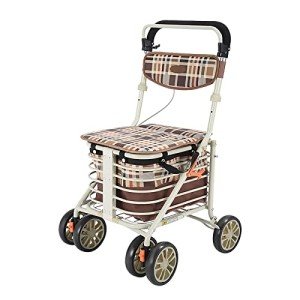
Also, ensure that the seat's depth supports their thighs while they are sitting in a straight position. Lastly, choose a model with a backrest which provides support for the entire length of their spine. This design distributes weight evenly across the seat, which reduces strain on joints and muscles.
A curved backrest is also important for providing adequate spinal support. The lower five lumbar spines create the concave curvature back's small and attach to the sacrum (a large triangular-shaped bone that lies at the base of the pelvis). Below these are the twelve thoracic vertebrae, which create a convex curve in the middle of the back, and finally the seven cervical vertebrae in the neck.
A curving backrest is an extra expense but it is worth it to increase comfort and efficiency. The extra support provided by a curved chair can help users maintain an ideal posture while sitting. This can reduce strain on their shoulders or back.
While shopping for a rollator, consider the frame width and seat size to make sure it can be inserted into frequently used passageways and doors. You should also check if there are any spare parts that can be purchased in the event that your unit is damaged beyond repair. Typically the manufacturer will offer directions to where they can be purchased from their website.
Adjustable Seat-to-Floor Height
Adjusting the seat's height is vital to ensure stability and reducing fatigue in the thighs and encouraging good posture. The height of the seat is measured from the back to the popliteal fossa or the kneecap of the person. A person may require a lower floor-to-seat height to ensure a proper heel strike when self-propelling or due to postural concerns for example, keeping the hips in a neutral place when transferring or to provide an angle that is higher between the thigh and the trunk for postural correction.
Rollator users who require a greater seat-to-floor height should think about a model with a bariatric design that has more seating space and a weight capacity of up 500 pounds. These models are typically wider than the standard four wheel rollators and come with a sturdy frame and large, high-quality wheels to accommodate heavier people.
The kind of seating you choose is also crucial. Unpadded plastic can become hotter and uncomfortable with prolonged use. Padded seats, on the other hand are more comfortable and less prone to rubbing. The padded and contoured seating is typically more expensive than non-padded seating. However, 4 wheel rollator with seat mymobilityscooters added cost could be worth it for comfort and durability.
If a person's range motion is restricted, a padded chair or a contoured chair that raises the client to a more upright posture will be better for them. This can reduce the strain on their hips or knees when walking, and allow them to participate in MRADLs with no additional caregiver assistance.
Before you purchase it is recommended to test the seat height in a retail store or at home. Ask the potential customer to sit in the chair with their feet flat on the ground and take off their shoes. Keep their elbows slightly bent and their arms on the sides. To determine the ideal handle height take a measurement from the wrist's center to the ground.
To ensure optimal performance, it's crucial that the height of the seat and handle height are in line. When the seat is adjusted to the ideal height and the handles are in a comfortable length, the user can rest more comfortably and reduce strain on joints and muscles. It's also helpful to think about the size of frequently-used doors and passageways in determining whether a certain model is able to navigate these obstructions.
Storage Baskets or Pouches
Rollator seats are equipped with storage baskets and pouches that permit users to carry their personal items or medical equipment during longer trips. These items are typically placed under the seat, and secured with a strap or flap that opens and closes. Some models feature a mesh or wire basket and some have an extra tray to hold the bag. Some tray models can also be removed for cleaning purposes to keep the interior tidy.
Many people use accessories to enhance the performance and ease of use of their rollator. A cup holder attachment removes the necessity of holding drinks with your hands and a tray for food provides a convenient way to store food and snacks on-the-go. Most manufacturers offer a variety of attachments to their specific models.
We loved the Hugo Mobility Explore model because it has a large under-seat storage bag for accessories as well as a smart folding mechanism. It's one of the tiniest models we've test, and its large eight-inch wheels, all-terrain, make it an ideal choice for outdoor use, as well. Panelists were impressed by the fact that the rollator can be folded down to a compact size to make it easy to transport in a car or on public transportation.
When looking for the best rollator, buyers must consider the frame material as well as the weight capacity and color. Aluminum frames that are lightweight offer stability and maneuverability and steel frames offer extra strength for those who weigh who weigh up to 250 pounds. Some models also come with bariatric or heavy-duty rollators, that have a greater capacity for weight and are larger than standard models to accommodate larger users. Some models also include a padded chair, which can ease pressure points and pain that are caused by conditions like arthritis or sciatica.
Accessories
The accessories for rollators can be adapted to meet the requirements of each individual user. Options like cushioned seats or adjustable heights from floor to seat, as well as storage pouches or baskets are just a few of the numerous ways these devices can increase comfort and convenience.
A lot of these accessories aid to reduce the stress on muscles and joint which can improve mobility. The addition of extra padding can make the chair more comfortable for those who sit often or are recovering from surgery or an injury. Padded arm rests will also ease discomfort when sitting or walking for long periods of time. A cup holder, walker tray, or tote bag are all frequently used accessories. These are great for carrying personal items, snacks, or medical supplies without the need to reach across the handles.
Certain rollator models allow the user to add a cushioned, foldable seat to allow you to easily switch from walking to sitting. While padded seats can be more comfortable, some users prefer seats with no padding because they are easier to clean and provide an impression of stability. The most important thing is to select a seat that is safe and suitable for your lifestyle. It is crucial, for example, to ensure that the brakes been activated and are on before sitting down. Failure to do so could cause accident or fall. A senior caregiver at home can reinforce rollator safety by reminding the patient that the parking brake must be activated prior to moving from a standing position to a sitting position.
The wheels you choose can be a key aspect in how the rollator performs. Smaller wheel sizes, typically 6" or 7" in diameter, provide a tighter turning radius, which is useful to maneuver indoor spaces and around furniture. The larger sizes of wheels can be as large as 10" in diameter and offer an easier ride on rough outdoor terrain. It is also recommended to buy a rollator that has locking front wheels, which can offer additional security and avoid accidental disengagement of the brakes during use.